
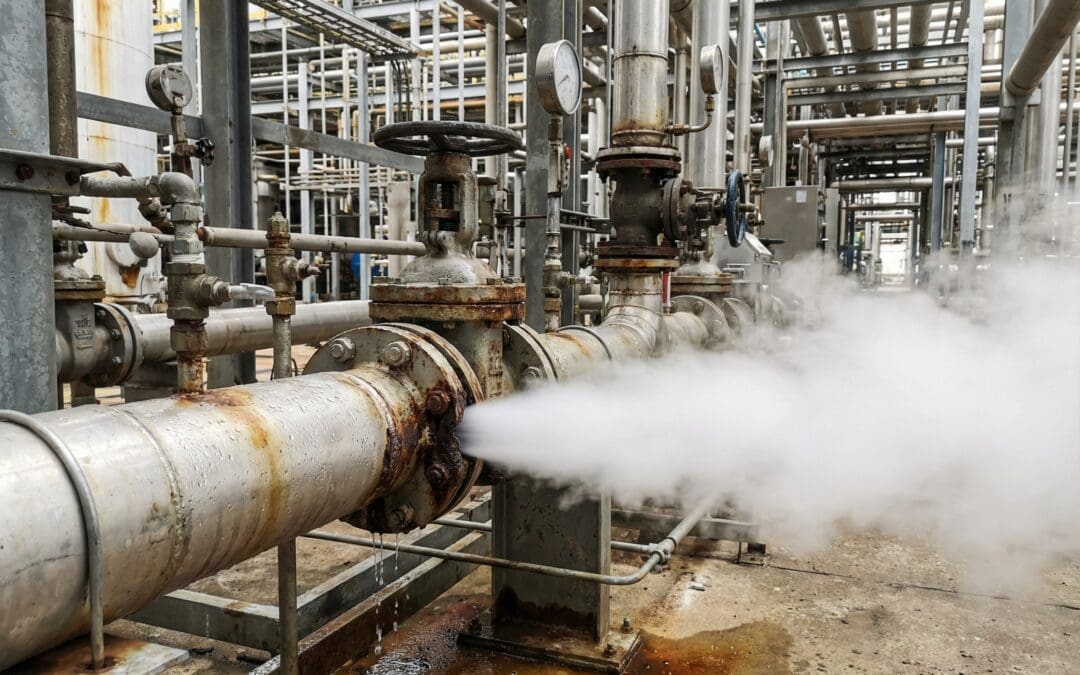
Steam systems are critical to operations across power generation, chemical processing, refining, manufacturing, and many other heavy industrial sectors. Because steam often operates at high temperature and pressure, even a small leak can escalate quickly into a safety risk, energy loss, equipment damage, or an unplanned outage.
Understanding why steam leaks occur and how they can be repaired while systems remain in service is essential for maintaining reliability and avoiding costly downtime.
Why Steam Leaks Are So Serious
Unlike many other process fluids, steam carries significant thermal energy. When containment is compromised, escaping steam can:
- Create immediate burn hazards for personnel
- Reduce system pressure and efficiency
- Accelerate corrosion and erosion of surrounding equipment
- Increase energy consumption and operating costs
- Trigger regulatory or safety concerns
In high-pressure systems, a leak can grow rapidly due to erosion of the surrounding material, turning a manageable issue into an emergency.
Common Causes of Steam Leaks in Industrial Facilities
Steam leaks rarely occur without warning. They are typically the result of long-term degradation, mechanical stress, or component failure.
- Corrosion and Erosion: High-temperature condensate, dissolved oxygen, and chemical treatment imbalances can cause internal corrosion. Over time, this weakens pipe walls and fittings. In high-velocity areas, steam can also erode metal surfaces, thinning them until failure occurs.
- Thermal Expansion and Fatigue: Steam systems experience constant heating and cooling cycles. This thermal movement creates stress at welds, supports, anchors, and connection points. Repeated expansion and contraction can lead to cracking, especially in older infrastructure.
- Flange and Gasket Failure: Flanged joints are common leak points. Gaskets degrade due to temperature cycling, pressure fluctuations, or improper installation. Once sealing integrity is lost, leaks can develop suddenly.
- Valve Packing Degradation: Control valves and isolation valves rely on packing to seal the stem. Over time, packing materials harden, shrink, or wear, allowing steam to escape.
- Mechanical Damage or Vibration: Piping subjected to vibration from pumps, turbines, or flow disturbances can develop fatigue cracks. External impacts or inadequate support can also compromise integrity.
- Aging Infrastructure: Many facilities operate steam systems that have been in service for decades. As materials approach the end of their design life, the likelihood of leaks increases.
Where Steam Leaks Most Often Occur
Common locations include:
- Weld seams and heat-affected zones
- Flanges and bolted connections
- Valve bodies and packing glands
- Expansion joints and flexible connections
- Elbows and high-turbulence areas
- Threaded connections and instrument taps
Identifying these high-risk areas allows facilities to prioritize inspection and maintenance efforts.
Why Shutdown Is Not Always Required
Traditionally, repairing steam leaks meant isolating the system, cooling it down, depressurizing it, and performing conventional repairs such as welding or component replacement. While effective, this approach can result in significant production losses, extended downtime, and complex restart procedures.
RAK’s modern in-service repair techniques allow many steam leaks to be addressed while the system remains operational, avoiding the cascading impacts of a shutdown.
Protecting Reliability Without Sacrificing Production
Steam leaks are not just maintenance issues — they are operational risks that can impact safety, efficiency, and profitability. Addressing them promptly with proven in-service repair methods allows facilities to maintain production while restoring system integrity.
With the right approach, even high-pressure steam leaks can often be controlled and repaired without interrupting operations.
Have questions about a steam leak or aging steam system? Contact RAK Industrial Services to discuss practical repair options that protect safety, reliability, and production.