
Understanding Epoxy Resin Chemical Resistance in Industrial Environments
Industrial facilities operate in demanding environments where equipment, flooring, tanks, and containment systems are regularly exposed to aggressive chemicals. Acids, solvents, fuels, and other corrosive substances can quickly degrade unprotected surfaces, leading to structural damage, safety risks, and costly downtime.
One of the most effective solutions for protecting these surfaces is the use of chemical resistant epoxy systems, particularly Novolac epoxy coatings, which are engineered to withstand extremely harsh chemical exposure.
Understanding how epoxy resin systems provide chemical resistance can help plant managers and maintenance teams make better decisions about long term asset protection.
Interested in talking to a team member? Contact us!
What Is Epoxy Resin Chemical Resistance
Epoxy resin chemical resistance refers to the ability of an epoxy coating system to withstand exposure to corrosive chemicals without breaking down, softening, or losing adhesion.
When properly formulated and applied, chemical resistant epoxy creates a dense, non porous protective barrier that prevents chemicals from penetrating the substrate beneath it. This barrier helps protect steel, concrete, and other materials from corrosion and deterioration.
Key performance benefits include:
- Resistance to acids, alkalis, and solvents
- Protection against chemical spills and exposure
- Strong adhesion to steel and concrete substrates
- High durability in aggressive industrial environments
- Long service life with proper surface preparation and installation
Because of these characteristics, epoxy coatings are widely used across industrial facilities where chemical exposure is common.
Why Novolac Epoxy Is Used for Harsh Chemical Environments
While many epoxy coatings offer basic protection, Novolac epoxy systems are specifically designed for environments with extreme chemical exposure.
Novolac epoxies have a higher cross link density than standard epoxy coatings. This creates a tighter molecular structure, which significantly improves resistance to aggressive chemicals and solvents.
As a result, Novolac epoxy coatings are often selected for environments where traditional coatings may fail.
Typical applications include:
- Chemical processing facilities
- Industrial containment areas
- Manufacturing plants
- Fuel and solvent storage areas
- Secondary containment systems
- Tank interiors and process vessels
These coatings provide long term protection while maintaining strong mechanical performance under heavy industrial use.
Common Industrial Applications for Chemical Resistant Epoxy
Facilities rely on chemical resistant epoxy systems to protect a wide range of assets. Some of the most common applications include containment structures, tanks, equipment protection, and industrial flooring.
Secondary Containment
Environmental regulations require many facilities to implement containment systems around tanks, chemical storage areas, and process equipment.
Epoxy coating systems provide a reliable protective layer that helps containment structures resist chemical attack and prevent leaks from penetrating the underlying concrete.
Tanks and Process Vessels
Chemical storage tanks and process vessels must withstand constant exposure to corrosive materials. High performance epoxy linings help maintain the structural integrity of these assets while preventing internal corrosion.
Properly installed epoxy linings can significantly extend the service life of tanks and reduce maintenance requirements.
Industrial Equipment Protection
Epoxy coatings are also used to protect pumps, piping, structural components, and other process equipment exposed to corrosive chemicals.
By creating a protective barrier, these coatings help prevent degradation that could lead to leaks or equipment failure.
Industrial Flooring
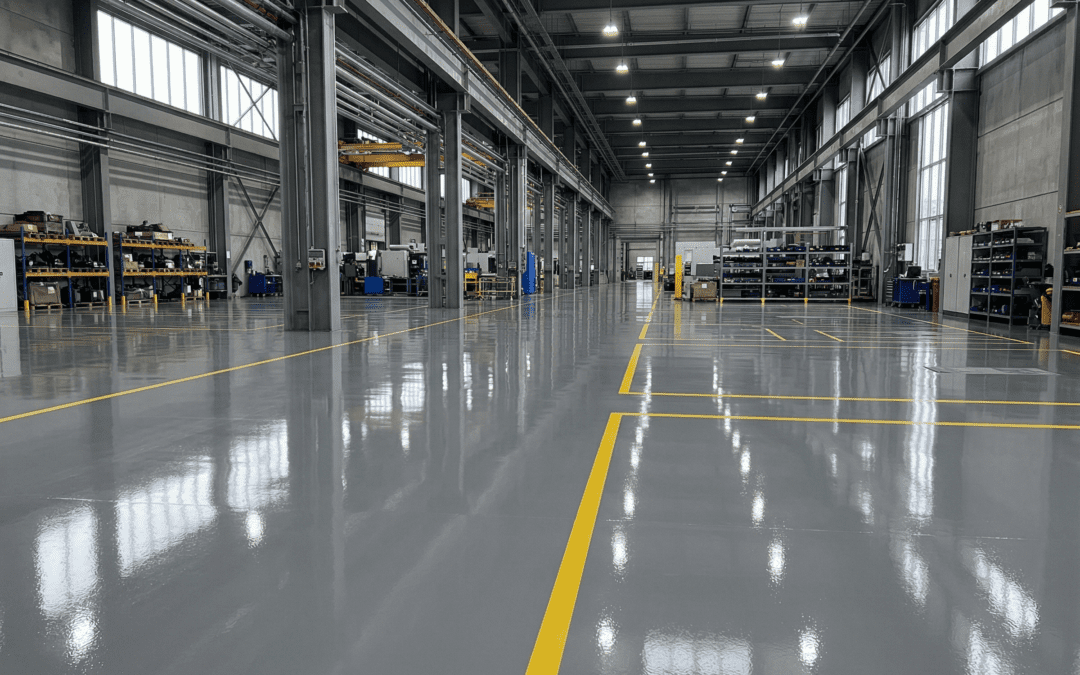
Manufacturing floors are frequently exposed to chemicals, oils, fuels, and heavy mechanical traffic. Chemical resistant epoxy flooring systems provide a seamless and durable surface that protects concrete while also making cleaning and maintenance easier.
These systems help prevent chemical absorption, surface degradation, and structural damage to the concrete substrate.
Why Proper Surface Preparation Is Critical
Even the highest quality epoxy system will fail if it is applied over a poorly prepared surface.
Surface preparation ensures the coating can properly bond to the substrate and perform as designed. In industrial environments, this typically involves abrasive blasting or mechanical surface preparation to remove contaminants, corrosion, and previous coatings.
Proper installation also includes:
- Careful inspection of the substrate
- Moisture testing when coating concrete
- Following manufacturer cure and application requirements
- Applying the correct coating thickness
When these steps are followed, chemical resistant epoxy systems can provide long term performance in demanding environments.
Long Term Protection for Industrial Assets
Chemical exposure is a constant challenge for industrial facilities. Without the right protective systems in place, corrosion and chemical degradation can quickly lead to expensive repairs or equipment replacement.
High performance epoxy systems, particularly Novolac epoxy coatings, provide a durable and reliable solution for protecting infrastructure exposed to harsh chemicals.
By creating a seamless, chemical resistant barrier, these coatings help facilities maintain safe operations, extend the life of critical assets, and reduce long term maintenance costs.
Industrial Coating Expertise
At RAK Industrial Services, protective coating systems are installed to help facilities maintain the integrity of tanks, containment systems, and other critical infrastructure exposed to harsh operating conditions.
With decades of experience working in industrial environments, RAK helps facilities implement coating and lining systems designed to perform reliably in demanding applications.