Industrial exhaust and fume ducts carry some of the harshest conditions in a plant: corrosive vapors, hot gases, dust and constant vibration. Over time, that exposure thins duct walls, weakens joints and opens leak paths. Left alone, damaged ductwork can reduce airflow, release fumes or dust into work areas, and in severe cases collapse.
Industrial exhaust duct repair gives facilities a way to restore damaged sections, seal leaking joints and protect ductwork from further wear, often without replacing entire runs. Understanding what causes duct damage and which repair methods are available can help maintenance and reliability teams plan the right fix. For an overview of the equipment RAK repairs, see air handling and exhaust system repair.
What Causes Industrial Exhaust Duct Damage?
Corrosive Fumes and Condensation
Exhaust systems serving pickling lines, plating tanks, chemical processes and scrubbers often carry acidic or caustic vapors. When those vapors condense on duct walls, they attack steel and can degrade fiberglass and liners, especially at low points, joints and areas where moisture collects.
Abrasion From Dust and Particulates
Ducts that carry dust, ash or other particulates wear from the inside. Elbows, transitions and areas where airflow changes direction take the most abuse, and wall loss in these spots can lead to holes and air leakage. Learn more about industrial abrasion and how to protect equipment from wear.
Thermal Cycling
Repeated heating and cooling causes ductwork to expand and contract. Over time, this movement stresses seams, flanges and connections, leading to cracks and joint separation.
Vibration and Mechanical Stress
Fans, blowers and nearby equipment transmit vibration into duct runs. Combined with corrosion or wall loss, vibration can loosen connections and accelerate cracking.
Inadequate Support and Physical Damage
Corroded hangers, failed supports, material buildup inside the duct and accidental impact can all overload a duct section. Once a section deforms, the joints around it often fail as well.
Common Signs Exhaust Ductwork Needs Repair
- Visible corrosion, rust staining or thinning duct walls
- Holes, cracks or separated joints
- Fumes, odors or dust escaping near ductwork
- Reduced airflow or capture at hoods and pickup points
- Sagging, deformed or poorly supported duct sections
- Damaged dampers or worn interior linings
Why Damaged Ductwork Is a Problem
A leaking or weakened duct does more than lose air. It can affect the entire ventilation or emission control system and create risks for people and equipment, including:
- Reduced capture of fumes and dust at the source
- Exposure risks for workers near leaking sections
- Higher energy use as fans work harder to move air
- Emission control and compliance concerns
- Risk of sudden failure or collapse of weakened sections
Industrial Exhaust Duct Repair Methods
The right repair depends on the duct material, operating temperature, chemical exposure, the type of damage and how long the system can be out of service.
Composite Reinforcement
Composite systems can reinforce corroded or thin-wall sections, rebuild structural strength and seal holes and cracks. Because composite repairs don’t require welding, they avoid hot work, and in many cases they can be installed while the system stays in service. See RAK’s composite repair services.
Joint and Connection Repair
Leaking flanges, laterals and separated joints are some of the most common duct problems. Composite materials can seal and reinforce these connections so they stay leak-free under vibration and temperature changes.
FRP Rehabilitation
Fiberglass reinforced plastic (FRP) offers strong corrosion resistance for ductwork handling aggressive fumes. Existing FRP ducts can be rehabilitated, and FRP can be used to restore sections damaged by chemical attack. Depending on the project, this work can be done on site or at RAK’s facility.
Protective Coatings and Abrasion-Resistant Linings
Once a duct is repaired, protective coatings and abrasion-resistant linings help guard against the corrosion and wear that caused the damage in the first place, extending the life of the repair.
Damper and Component Repair
Dampers, transitions and other components inside the duct system wear out alongside the ductwork. These can often be rehabilitated rather than replaced, as in RAK’s FRP exhaust duct damper rehabilitation project.
Repair or Replace Damaged Ductwork?
Replacing long runs of ductwork is costly and can require extended outages, especially for overhead runs or ducts in congested areas. When most of the system is still sound, repairing damaged sections and protecting them from further wear is often the faster, lower-cost option. Replacement may make more sense for sections that have collapsed or lost too much material to reinforce. The same logic applies to piping; see Industrial Pipe Repair vs. Replacement.
Case Study: Collapsed Fume Exhaust Duct Rehabilitation
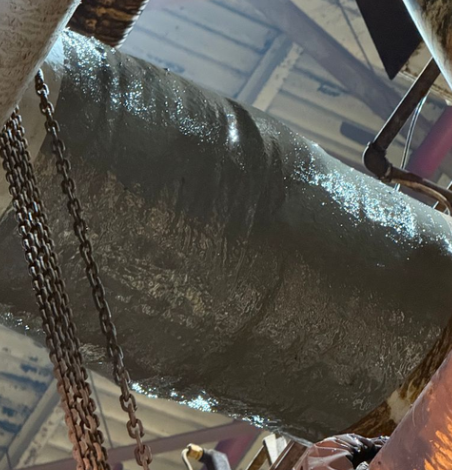
At one industrial facility, about 50 feet of 18-inch fume exhaust ductwork collapsed, leaving multiple damaged connections and large gaps at several lateral joints. RAK installed new ductwork where needed and repaired and reinforced five connections with fast-curing composite materials and protective coatings. All repaired joints remained leak-free, and the exhaust system was returned to service quickly to minimize downtime. Read the full case study.
Related Air Handling Equipment
The same problems that damage exhaust ducts also affect baghouses, stacks, scrubbers and other air handling equipment. RAK has rehabilitated baghouse units with abrasion protection and restored a fume exhaust system using FRP.
Industrial Exhaust Duct Repair From RAK Industrial Services
RAK Industrial Services repairs and protects exhaust ducts and air handling equipment for industrial facilities, with a focus on limiting downtime. Services include:
- Composite reinforcement for corroded, thin or cracked ductwork
- Sealing of leaking joints, flanges and laterals
- FRP duct and component rehabilitation
- Protective coatings and abrasion-resistant linings
- Damper, baghouse and stack repair
Dealing with leaking, corroded or damaged ductwork? Contact RAK to talk through your system and repair options.