Flanged connections are everywhere in an industrial plant. They join pipe sections, valves, pumps, tanks and equipment, and every one of them depends on a gasket and a set of bolts to stay sealed. When that seal breaks down, the result is a flange leak, one of the most common leaks on steam, water, gas, acid and process lines.
Fixing a flange leak the traditional way means isolating the line, depressurizing it, pulling the flange apart and replacing the gasket. On lines that can’t be taken out of service, flange leak repair using on-line methods allows the leak to be sealed while the system keeps running. For a broader look at leaks on operating systems, see Industrial Leak Repair for Active Pipe, Valve and Flange Leaks.
What Causes Flange Leaks?
Gasket Failure
The gasket is the sealing element between the two flange faces. Over time, gaskets can harden, crack, erode or degrade from heat, pressure and the fluid in the line. A gasket that isn’t suited to the service will fail even sooner.
Loss of Bolt Load
Flange bolts hold the gasket under compression. Bolts can relax over time, and uneven tightening during installation can leave parts of the gasket under-compressed. Either way, the seal weakens and a leak path opens.
Thermal Cycling
Lines that heat up and cool down repeatedly expand and contract. That movement works against the bolts and gasket, especially on steam and hot process lines.
Corrosion
Corrosion can attack flange faces, bolts and nuts, particularly on lines carrying water, acid or corrosive gases, or flanges exposed to wet conditions outside the pipe. Corroded bolts lose strength, and pitted flange faces no longer seal evenly.
Vibration and Pipe Stress
Vibration from pumps and flow, along with pipe misalignment or poor support, puts extra stress on flanged joints and can gradually loosen the connection.
Common Signs of a Flange Leak
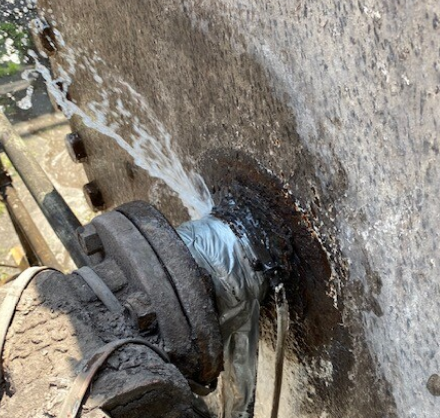
- Steam, vapor, gas or fluid escaping at the flange joint
- Dripping, staining or residue around the flange or below it
- Hissing near a flanged connection
- Corroded, rusted or missing bolts
- Gas odors or readings from leak detection equipment
- Insulation that is wet or damaged around a flange
Why Flange Leaks Should Not Wait
Flange leaks rarely stay small. Leaving one alone can lead to:
- Flange face damage: Escaping steam or fluid can erode the flange faces, making a future seal harder to achieve.
- Safety hazards: Steam, hot water, acid and gas leaks can cause burns, chemical exposure and fire risk.
- Energy and product loss: Steam and process leaks waste energy and material around the clock.
- Environmental and compliance concerns: Leaks in gas or chemical service can create emissions and reporting issues.
- Unplanned shutdowns: A growing leak can force a line down at the worst possible time.
Flange Leak Repair Options
Re-Tightening the Bolts
If the gasket is still in good condition, a minor leak may be stopped by carefully tightening the bolts in the correct pattern. This should be done by qualified personnel, since uneven or excessive tightening can crush the gasket or damage the flange.
Replacing the Gasket
Opening the flange and installing a new gasket restores the seal, but it requires isolating and depressurizing the line. For many systems, that means waiting for a planned outage or taking a line out of service.
On-Line Flange Leak Sealing
When a line can’t be shut down, the leak can be sealed while the system stays in operation. Depending on the flange and the conditions, this can involve a custom clamp or enclosure fitted around the flange and sealed in place, sealing the gap between the flange faces, or reinforcing the flange and surrounding pipe with a composite system. The approach is selected based on the flange size, pressure, temperature and fluid in the line. Learn more about RAK’s on-line leak repair services.
Why Pressure and Temperature Matter
Flange leaks on high-pressure steam, hot water, gas and acid lines require careful planning. The repair method, sealing materials and safety procedures all depend on the operating conditions, and working near an active leak requires trained technicians and proper protective equipment. For more on steam systems, see How Industrial Steam Leak Repair Works Without Shutting Down the System.
Flange Leak Repair Examples From RAK
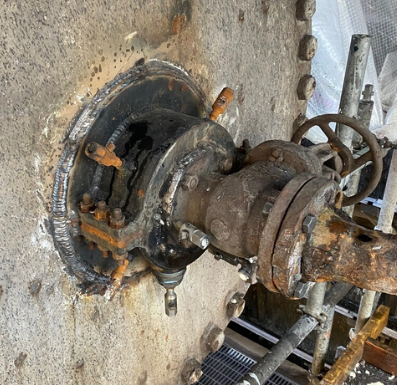
At one plant, leaks at a tank nozzle flange and valve were affecting operations. RAK sealed the leaks using precision injection techniques with minimal downtime. Read the tank leak repair case study.
At another facility, a cracked valve on a service water line caused a significant leak in a confined space. RAK contained the leak, reinforced the flange and replaced all of its bolts while the line stayed in operation, returning the system to full service. See the water line case study.
On an acid process line, leaks at a flange and a weld joint were sealed and reinforced with an acid-resistant carbon fiber system while the line kept running. See the acid line case study.
Preventing Future Flange Leaks
- Choose gaskets rated for the line’s temperature, pressure and fluid
- Tighten bolts evenly, in the correct pattern, to the specified load
- Inspect flanges on high-temperature and high-vibration lines regularly
- Replace corroded bolts before they lose strength
- Correct pipe misalignment and support problems that stress flanged joints
- Address small leaks early, before they damage the flange faces
Leaks at the stem of a valve are a different problem. If that’s what you’re dealing with, see Valve Packing Leaks: Causes and How They’re Repaired Without Taking the Valve Out of Service.
Flange Leak Repair From RAK Industrial Services
RAK Industrial Services seals active leaks on flanges, valves and piping while systems remain in operation. Flange leak repair services include:
- On-line flange leak sealing
- Custom clamps and enclosures for flanged connections
- Composite reinforcement of flanges and surrounding pipe
- Steam, water, gas, acid and process line leak repair
- 24/7 emergency response
Have a leaking flange that can’t wait for your next outage? Contact RAK to talk through your situation and repair options.